Birth Story of 《FANCL Upcycled Clear Folder》——Repurposing Used Cosmetic Containers
Birth Story of 《FANCL Upcycled Clear Folder》——Repurposing Used Cosmetic Containers
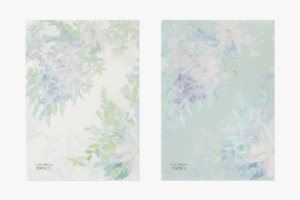
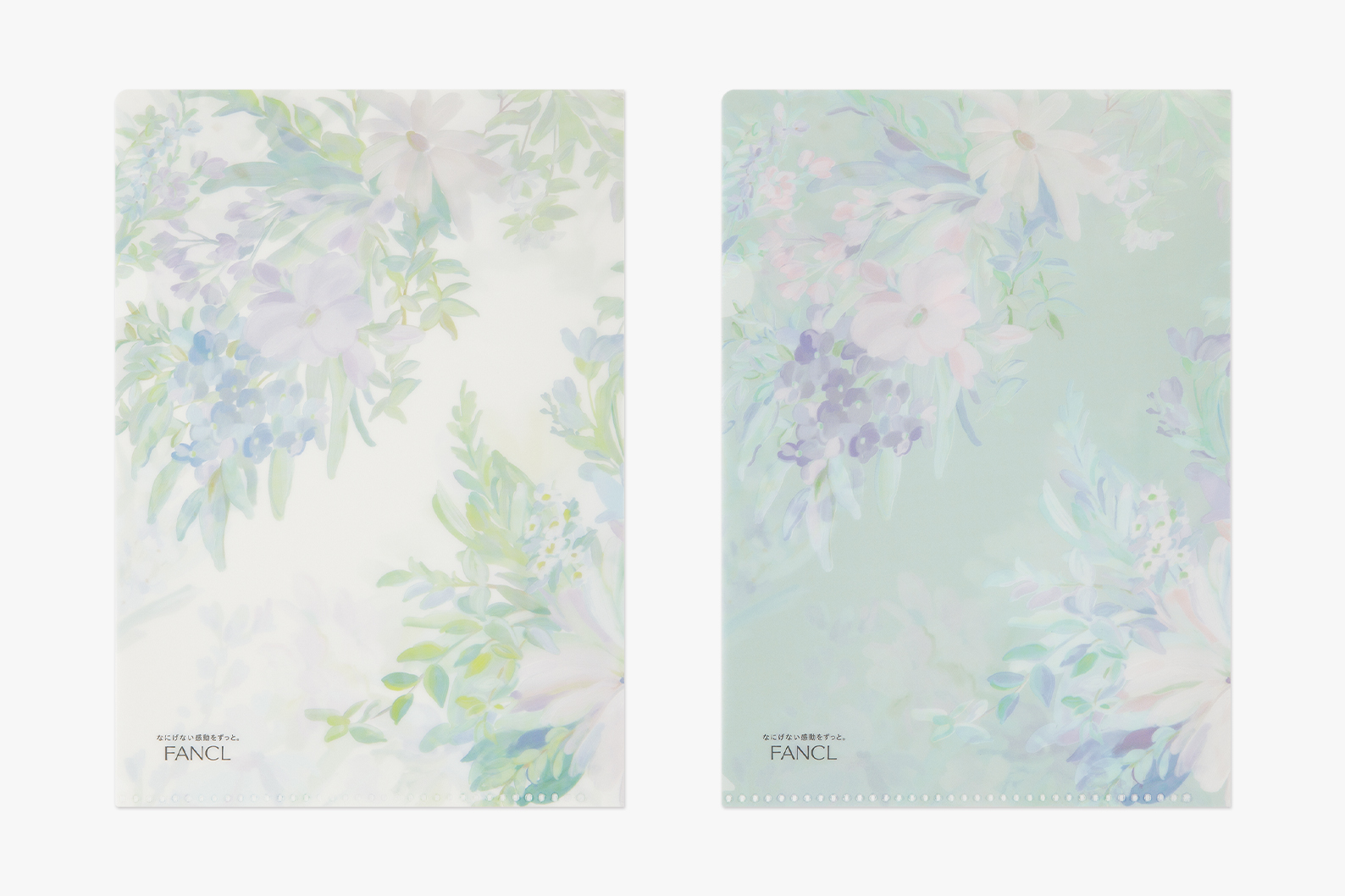
FANCL Corporation (hereinafter referred to as FANCL) is a renowned Japanese manufacturer of cosmetics and health foods. The company runs the FANCL Recycling Program to collect used cosmetic containers and upcycle them into products such as plant pots. As part of this initiative, Designphil undertook the planning and production of the Clear Folder made from recycled containers. Read on to uncover the behind-the-scenes story of how recovered containers were transformed into novelty gifts.
Table of Contents
A Clear Folder with Botanical Patterns Born from Cosmetic Containers — Valuing Finite Resources
Numerous Hurdles Along the Development Journey
Thoughtful Design Concepts Refined with Ingenuity
Message from the Project Manager
A Clear Folder with Botanical Patterns Born from Cosmetic Containers — Valuing Finite Resources
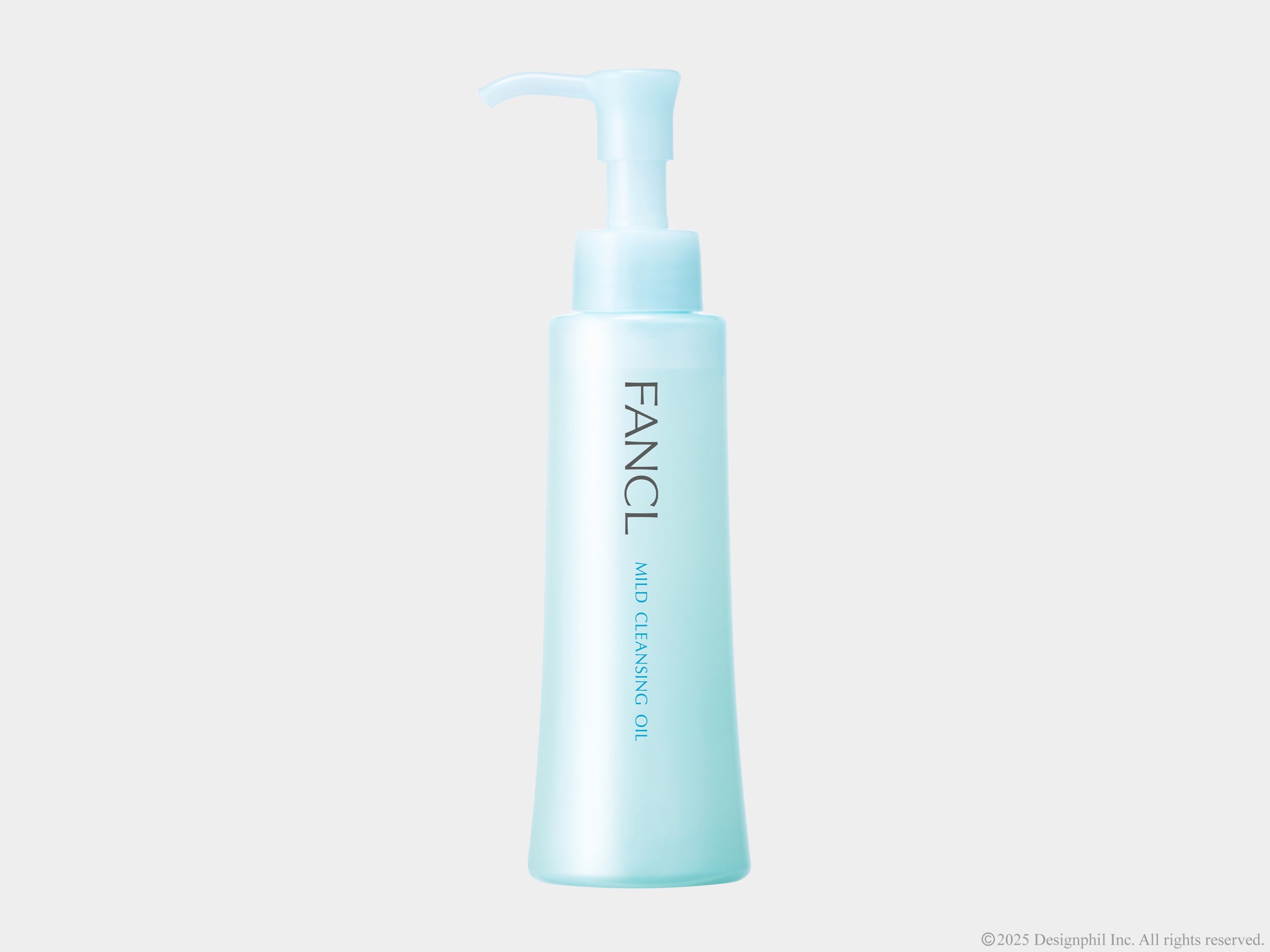
The raw material for these clear folders is recovered empty bottles of FANCL Cleansing Oil.
The partnership originated from a private exhibition hosted by our company in 2023. Representatives from FANCL visited the showcase featuring plastic-free stationery and cultural and creative items made with recycled pulp. They then proposed a collaboration idea:
“We collect empty cosmetic bottles at our directly operated stores nationwide. However, we face multiple challenges that prevent us from reprocessing these containers into cosmetic packaging. Could we utilise these materials to develop appealing cultural and creative products?”
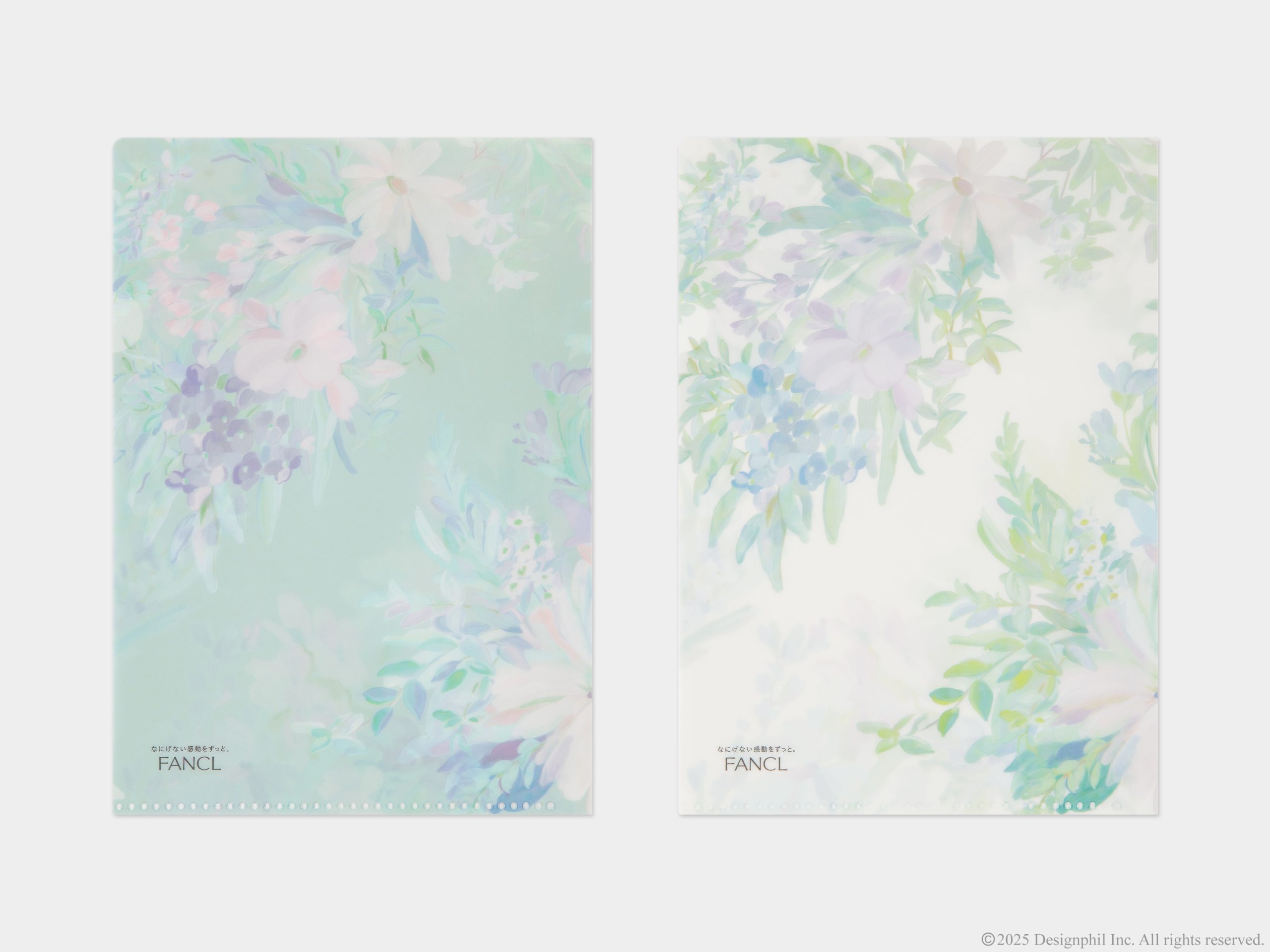
Our goal was to create an item that leverages the inherent properties of the container material while resonating with FANCL’s customers. This natural-style clear folder is the end result.
Production Process: Upcycled Clear Folder under the FANCL Recycling Program
- Collect used Cleansing Oil containers at FANCL directly operated stores across Japan
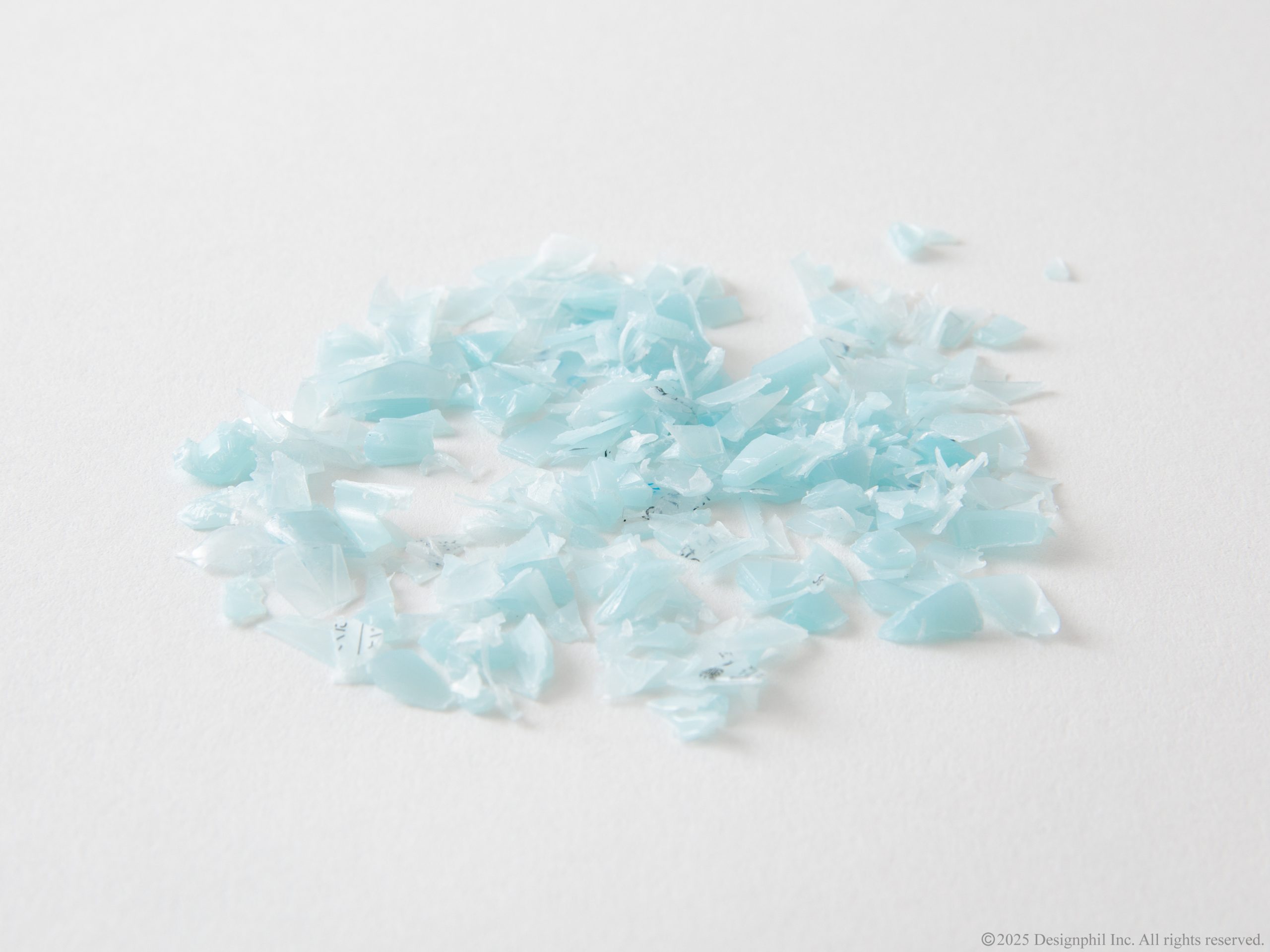
- Deliver containers to FANCL Smile, FANCL’s special subsidiary, for sorting, washing, drying and shredding
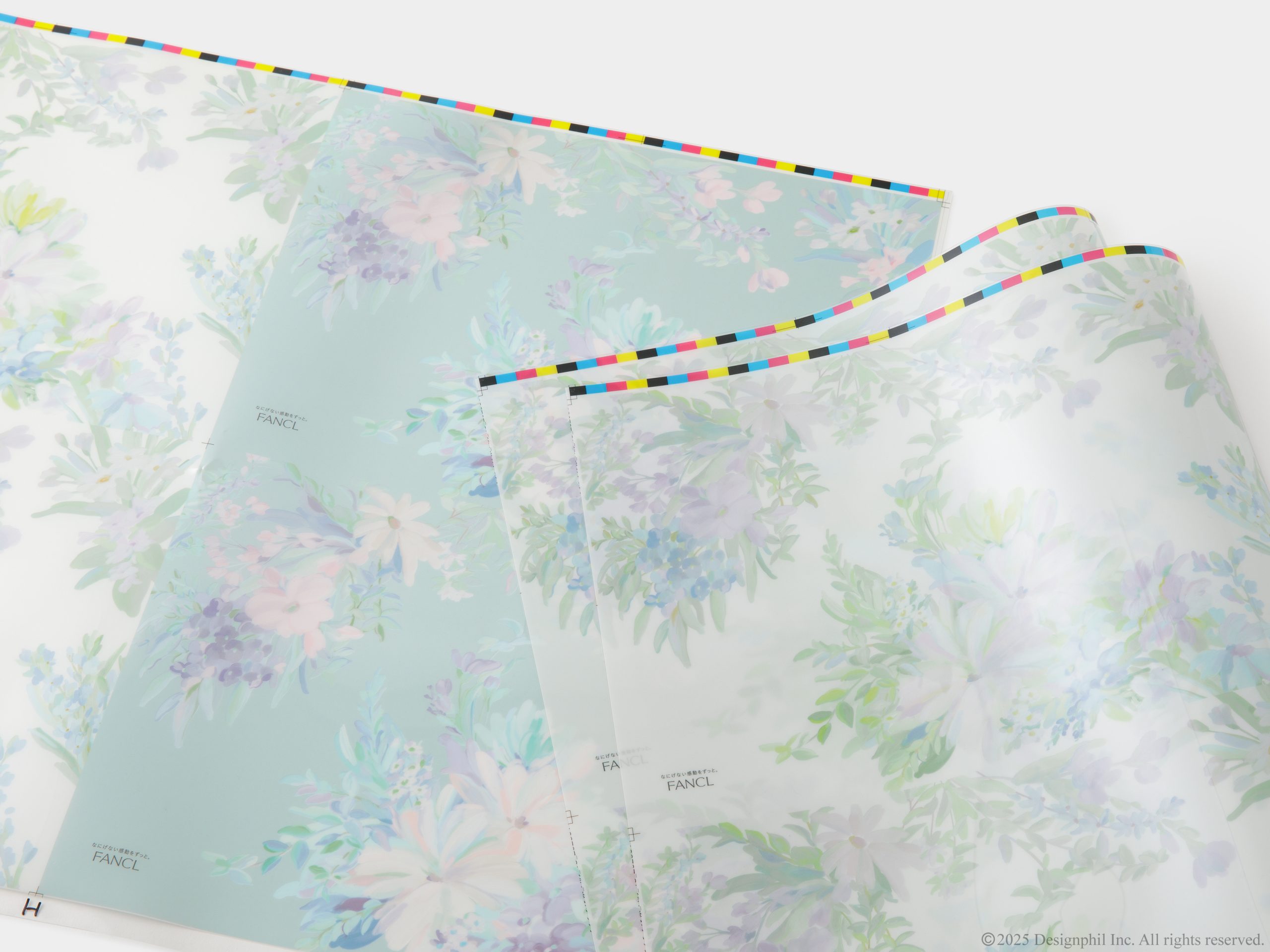
- Further pulverise plastic flakes, extrude into sheets and print patterns
- Hot melt edge sealing
- Finished products
Challenges Throughout the Development Process
The biggest challenge in manufacturing upcycled products lies in the inconsistent quality of recycled raw materials, making the entire development process extremely challenging. We interviewed the project team to explore the untold difficulties behind the development.
— What challenges did you encounter during the implementation of the planning project?
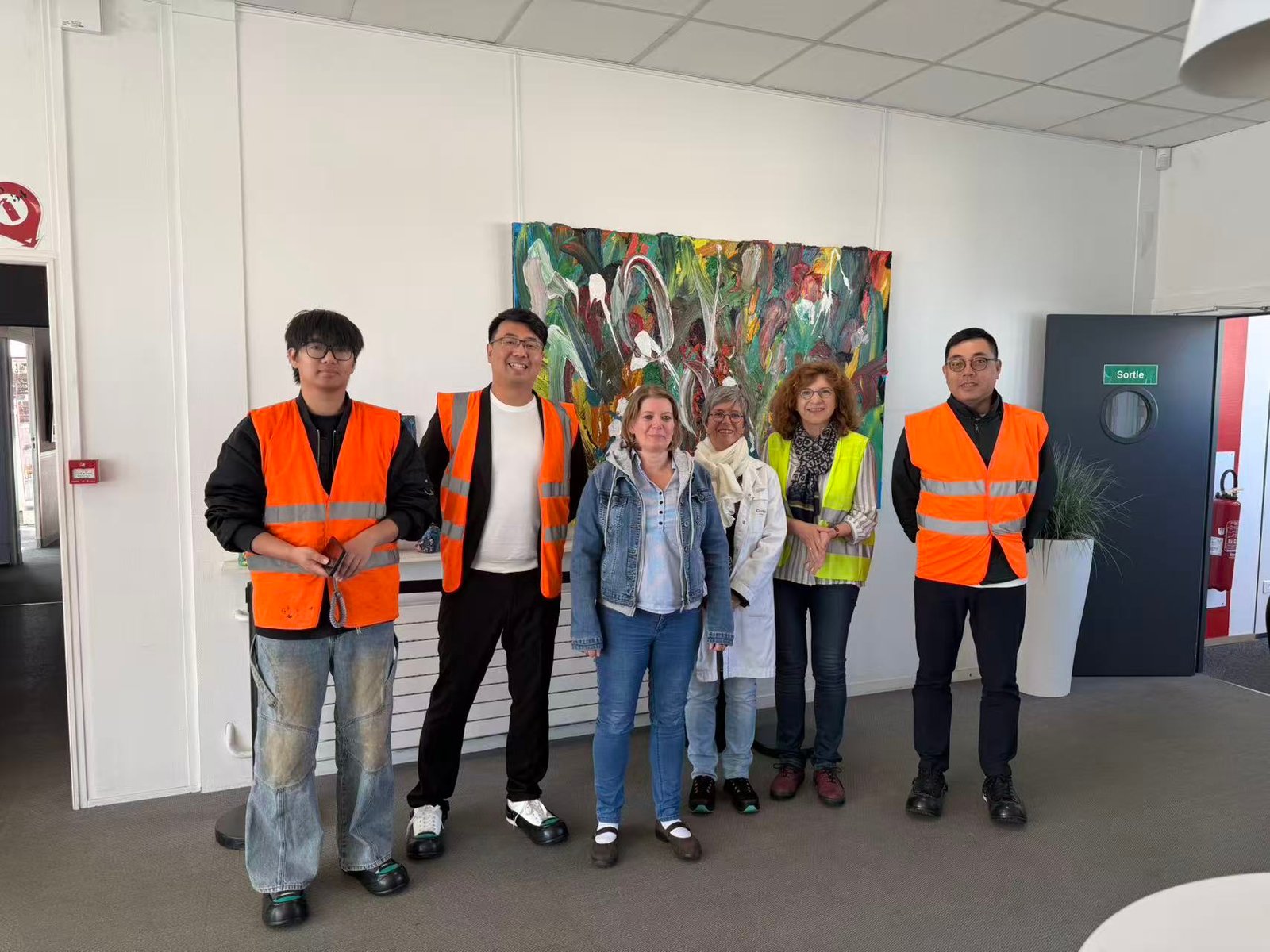
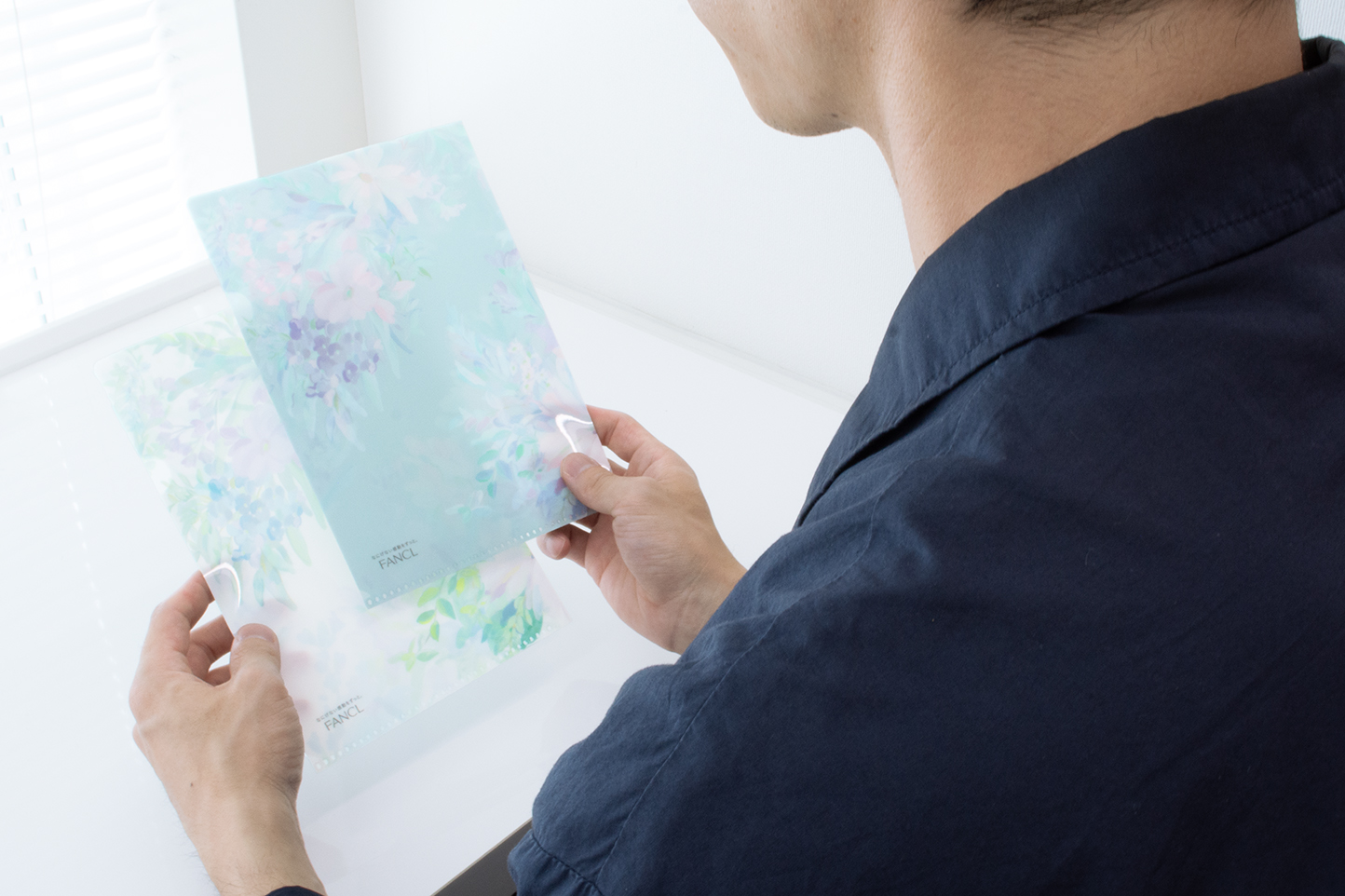
Ichikawa (Production Management): The greatest hurdle was the ultrasonic thermal edge sealing process for the folders. Conventional clear folders are mostly made of PP (polypropylene), while this product adopts recycled PET (polyester) empty cosmetic containers as the raw material. We specially customized PET sheets for formal production.
PET sheets are far more difficult to bond via thermal melting than PP materials. Furthermore, the use of recycled cosmetic containers as raw materials further increased the difficulty of edge sealing processing. We conducted repeated verification, sample production and solution discussions to continuously confirm the feasibility of successfully shaping the folders.
Thoughtful Design Concepts Full of Ingenuity
— What persistent principles and creative ideas underpinned the design?
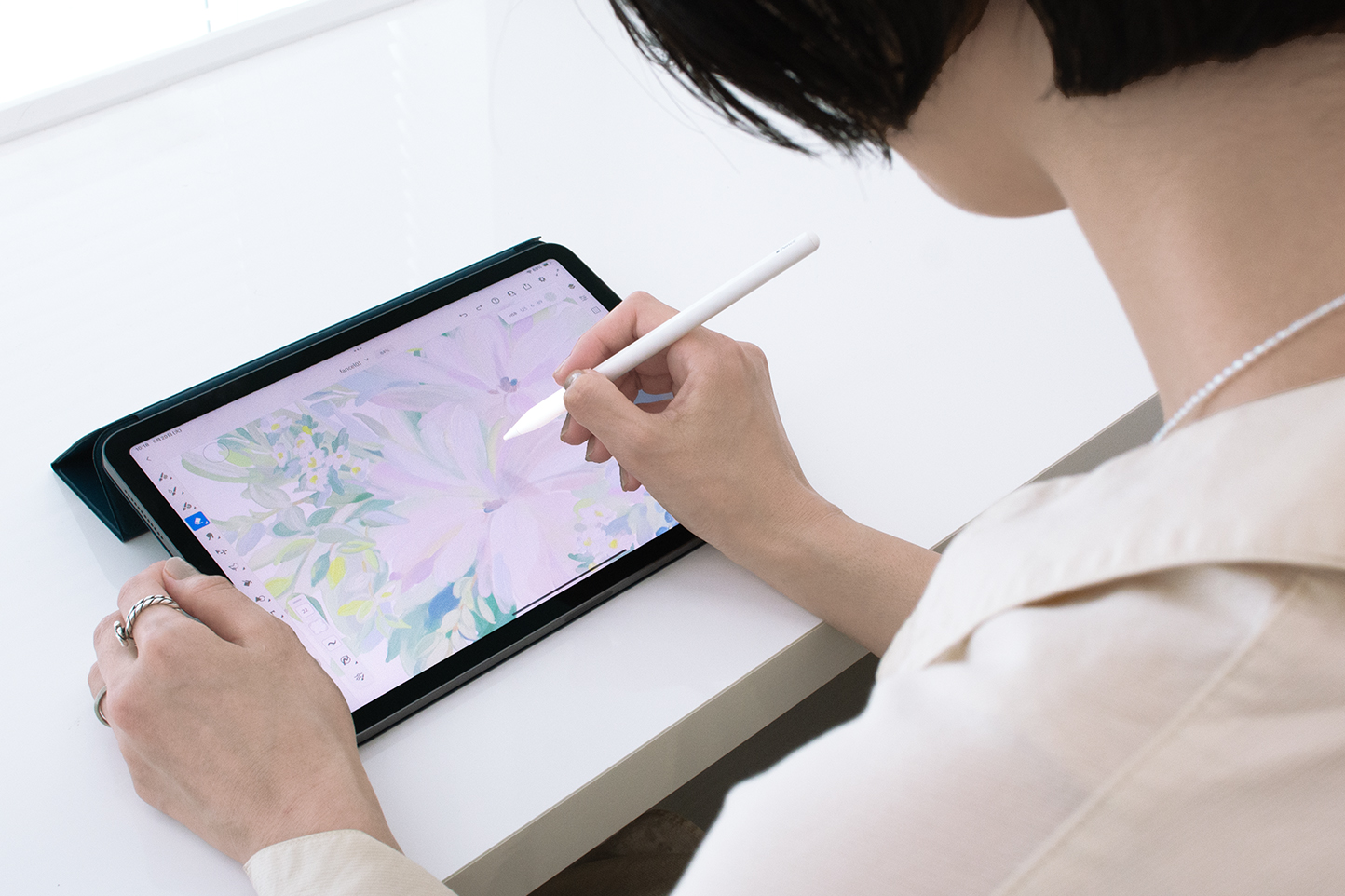
Maeda (Designer): We wanted users to feel relaxed and joyful when using this product in daily life. For this reason, botanical patterns painted with watercolor brushstrokes were adopted, with the overall design themed on a natural botanical style.
The design is inspired by the product’s raw material — FANCL cleansing oil containers, which feature a unique transparent and pure texture. It also echoes the core concept of the cleansing oil: relieving daily fatigue and refreshing the skin. The soft and flowing watercolor brushstrokes vividly convey the vibrant vitality of plants.
Message from the Project Lead
Takei (Sales Division)
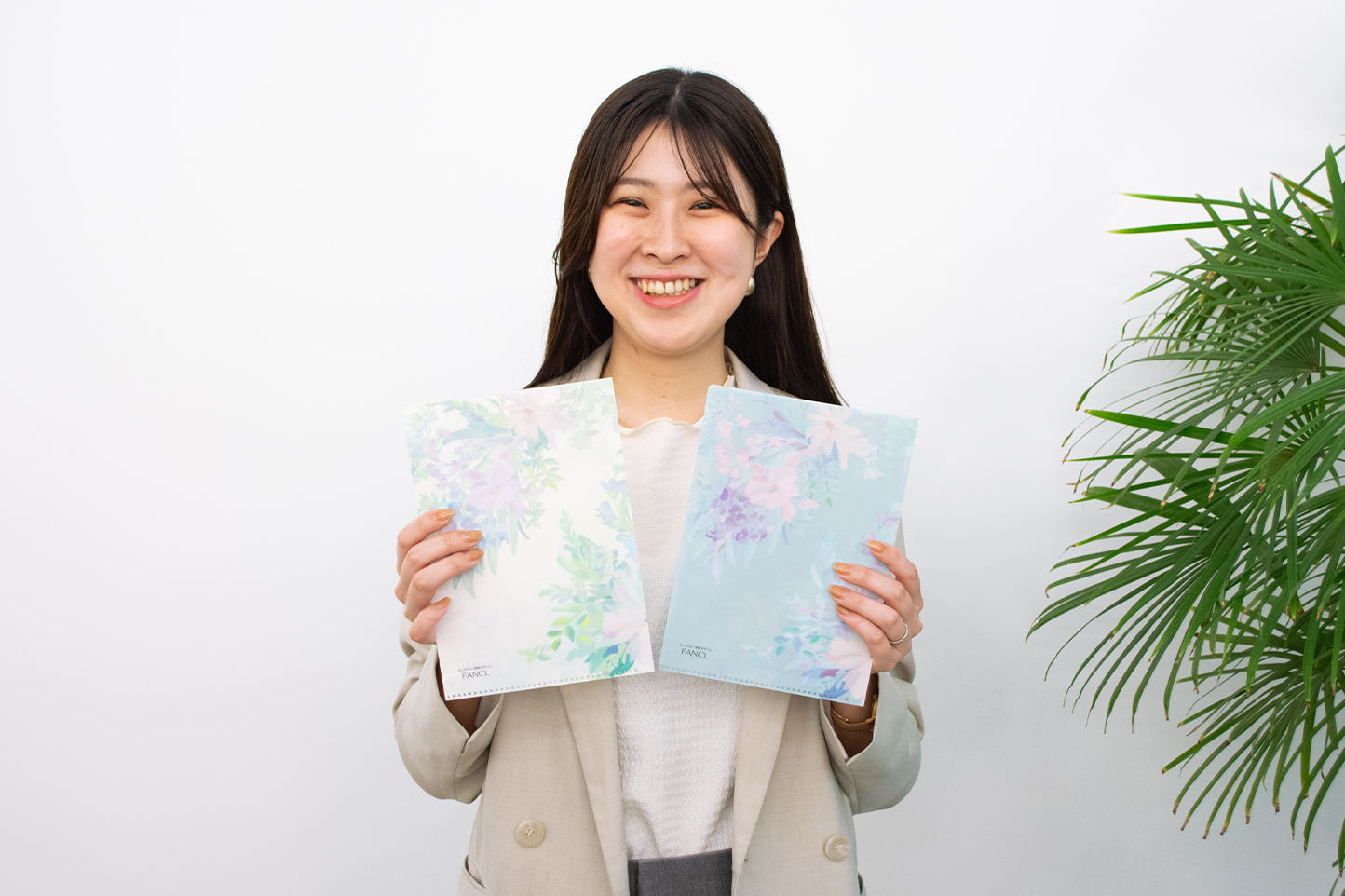
Consumers’ environmental awareness has grown year by year, and market demand for eco-friendly corporate gifts keeps rising. While upcycling waste paper, production offcuts and recycled materials generated by enterprises enables distinctive environmental initiatives, such projects are notoriously hard to implement. We are honored to establish this partnership with FANCL. Taking material properties into consideration, we held repeated discussions and trials to identify viable product formats made from recovered containers. Thanks to strong support from FANCL and manufacturing partners, we successfully completed product development.
Project Case|FANCL Recycling Program
Beyond fulfilling custom orders such as logo printing and finished goods production, the Commercial Design Division at Designphil actively promotes the B with B co-creation model. We work alongside clients to address their business pain points and resolve challenges together.
Moving forward, we will keep developing products that deliver new value to waste materials, supporting companies in advancing sustainable business operations.
※ Note: Conventional transactions between enterprises are defined as BtoB. B with B represents our collaborative approach: we join hands with clients to tackle their deeper corporate challenges.
Author:
•
Published: 2026-07-24